 Manufacturer of disposable household products since 1972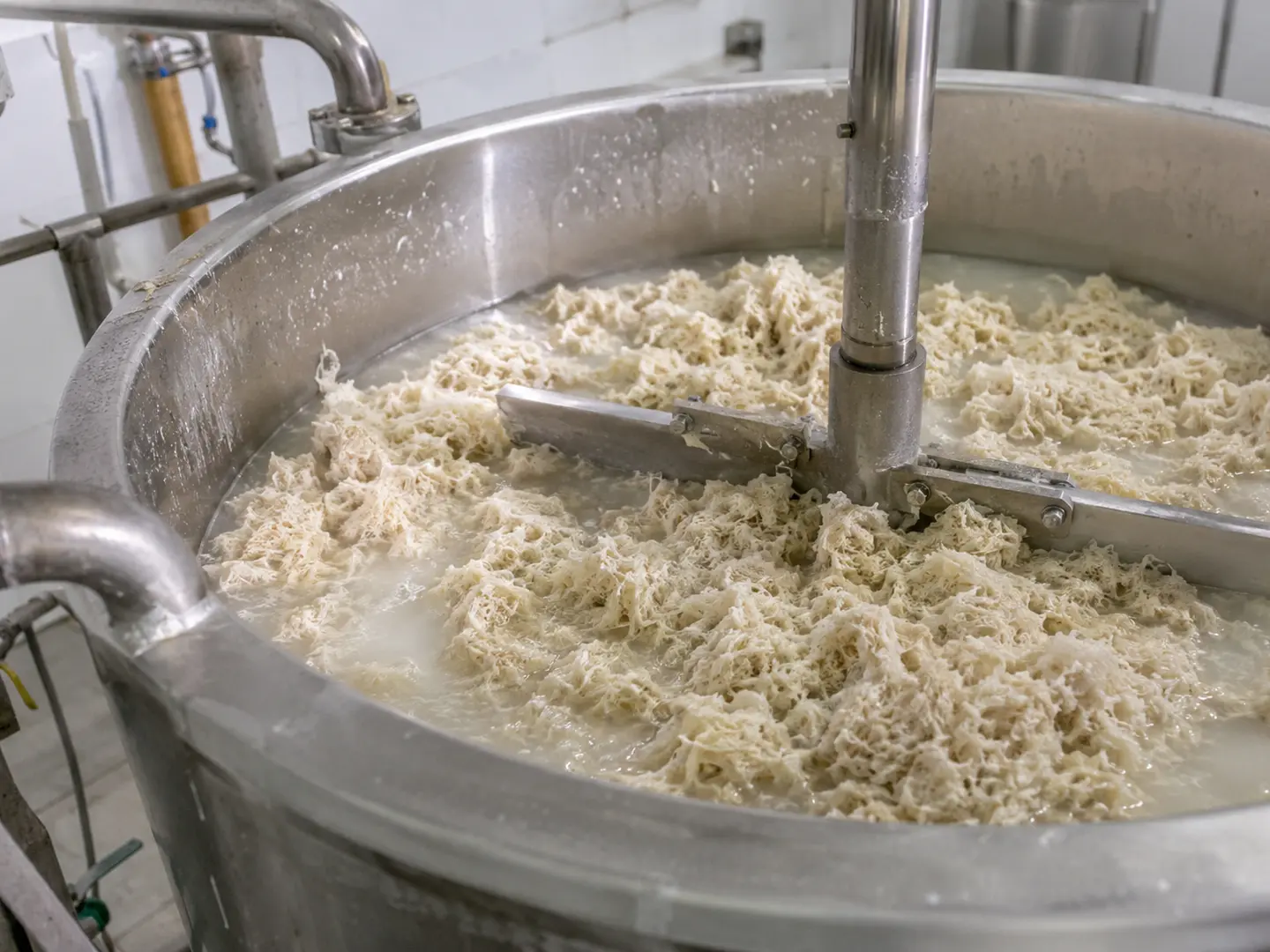
1
The fibres take a new form
The prepared fibres are mixed with water to create an even pulp ready for moulding.
GREEN BAGASSE TABLEWARE
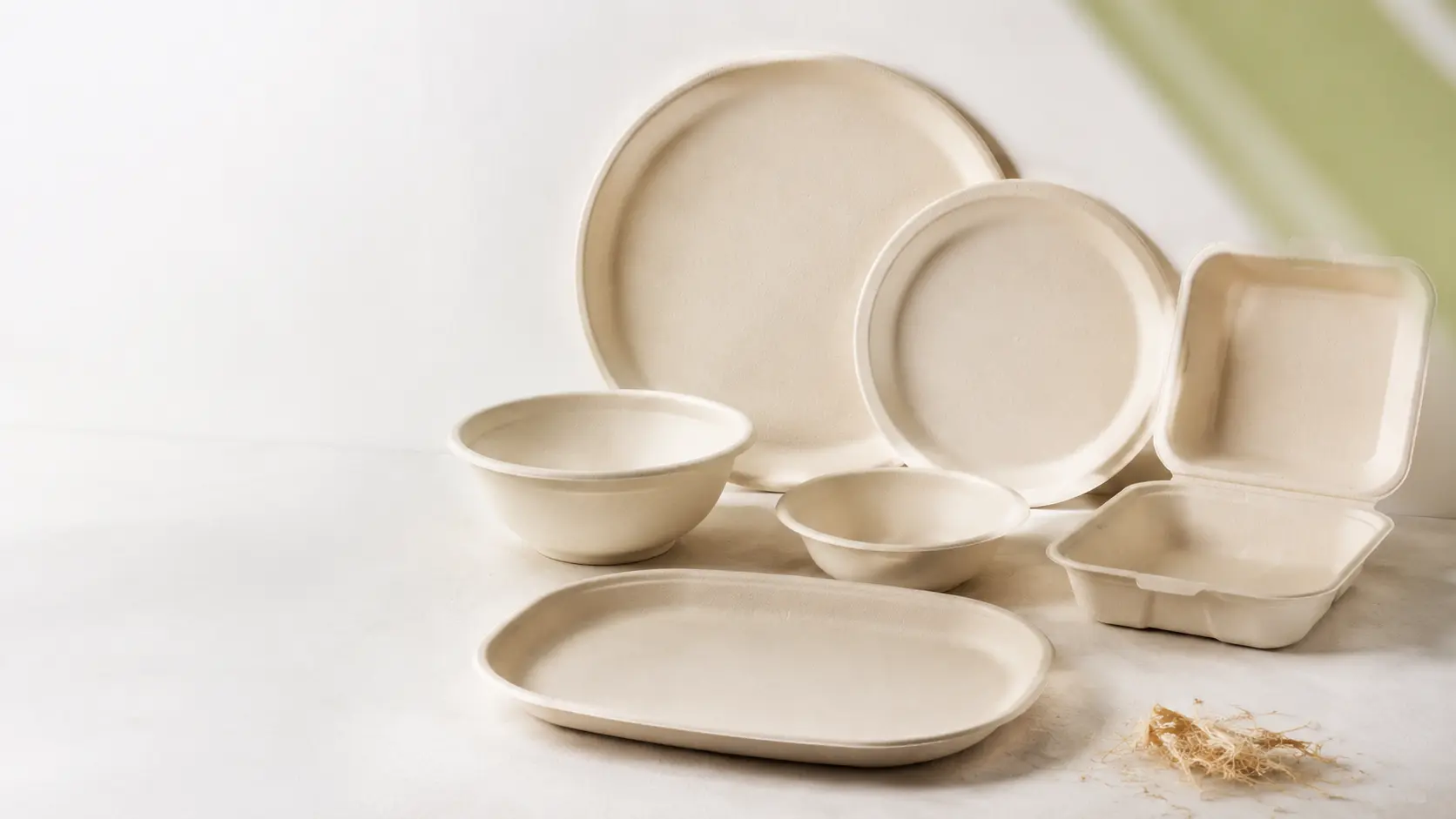
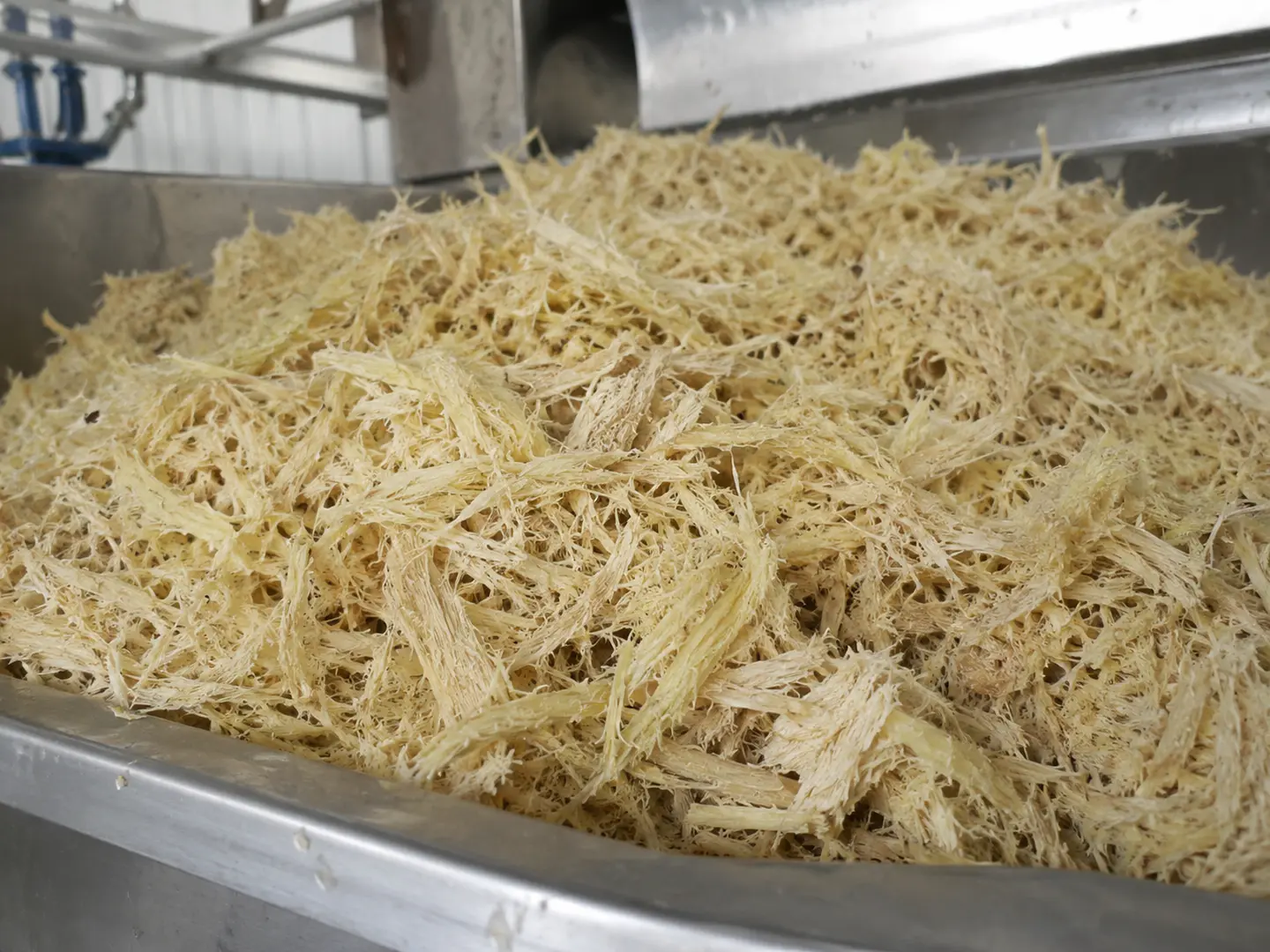
Before becoming tableware, this material was part of the sugarcane stalk. Fibre left after juice extraction is pulped and moulded for situations where disposable service is necessary, but conventional plastic need not be the only option.
QUICK ANSWER
Bagasse is the fibrous portion of the sugarcane stalk left after juice extraction. It can be pulped, then shaped with pressure and heat into plates, bowls and food containers. This is why bagasse tableware is also described as sugarcane-fibre or plant-based disposable tableware.
GENERAL PRODUCTION PROCESS
A visual account of the general moulded-fibre tableware process
The prepared fibres are mixed with water to create an even pulp ready for moulding.
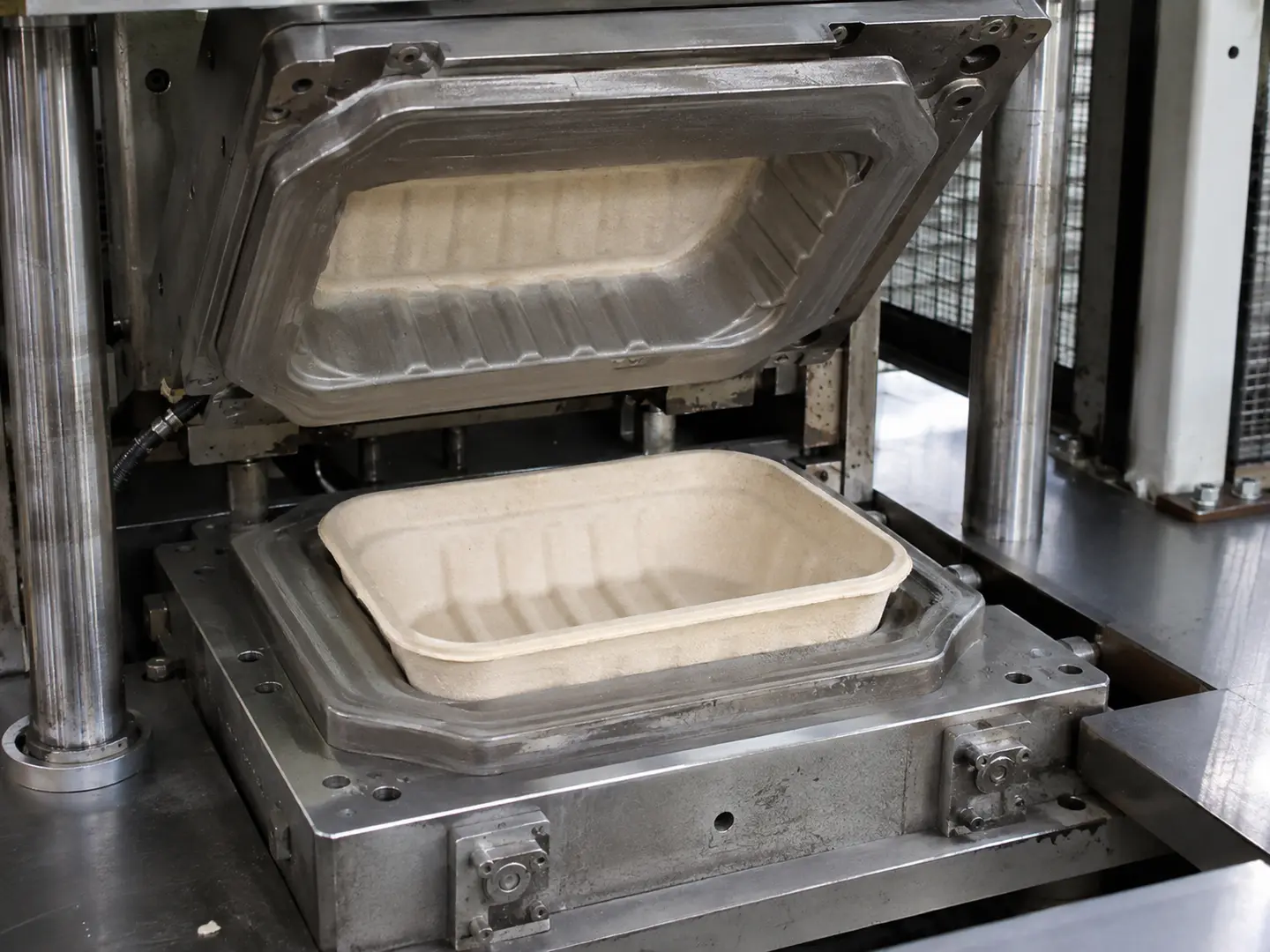
The pulp is placed in a mould and formed into tableware using pressure and heat.
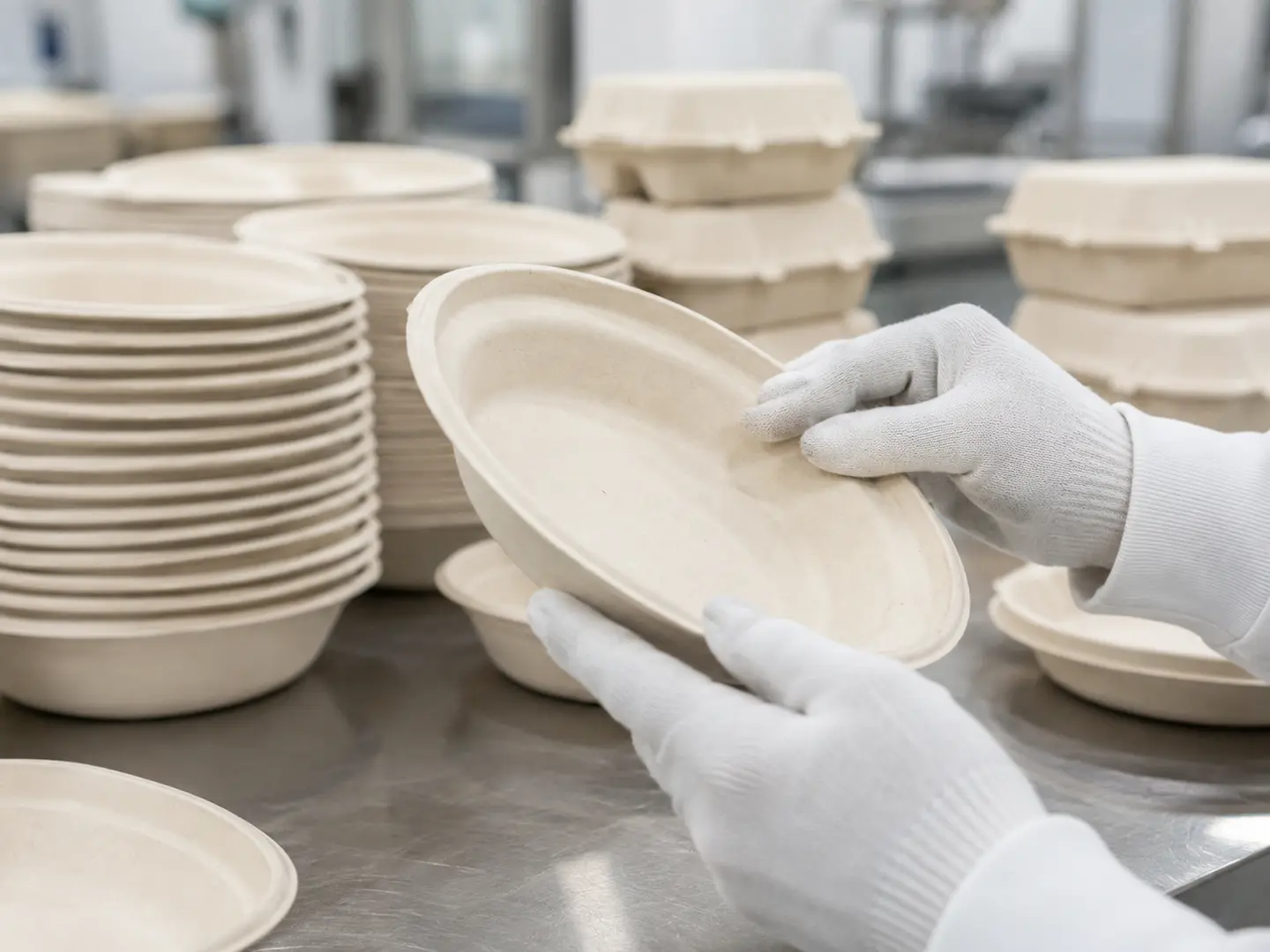
After forming and drying, the tableware is inspected and prepared for packing.
MATERIAL AND PERFORMANCE
A clear view of the functional and environmental benefits of this range
TWO DIFFERENT MATERIAL FAMILIES
Both belong to the broader plant-based tableware category, but they are not the same.
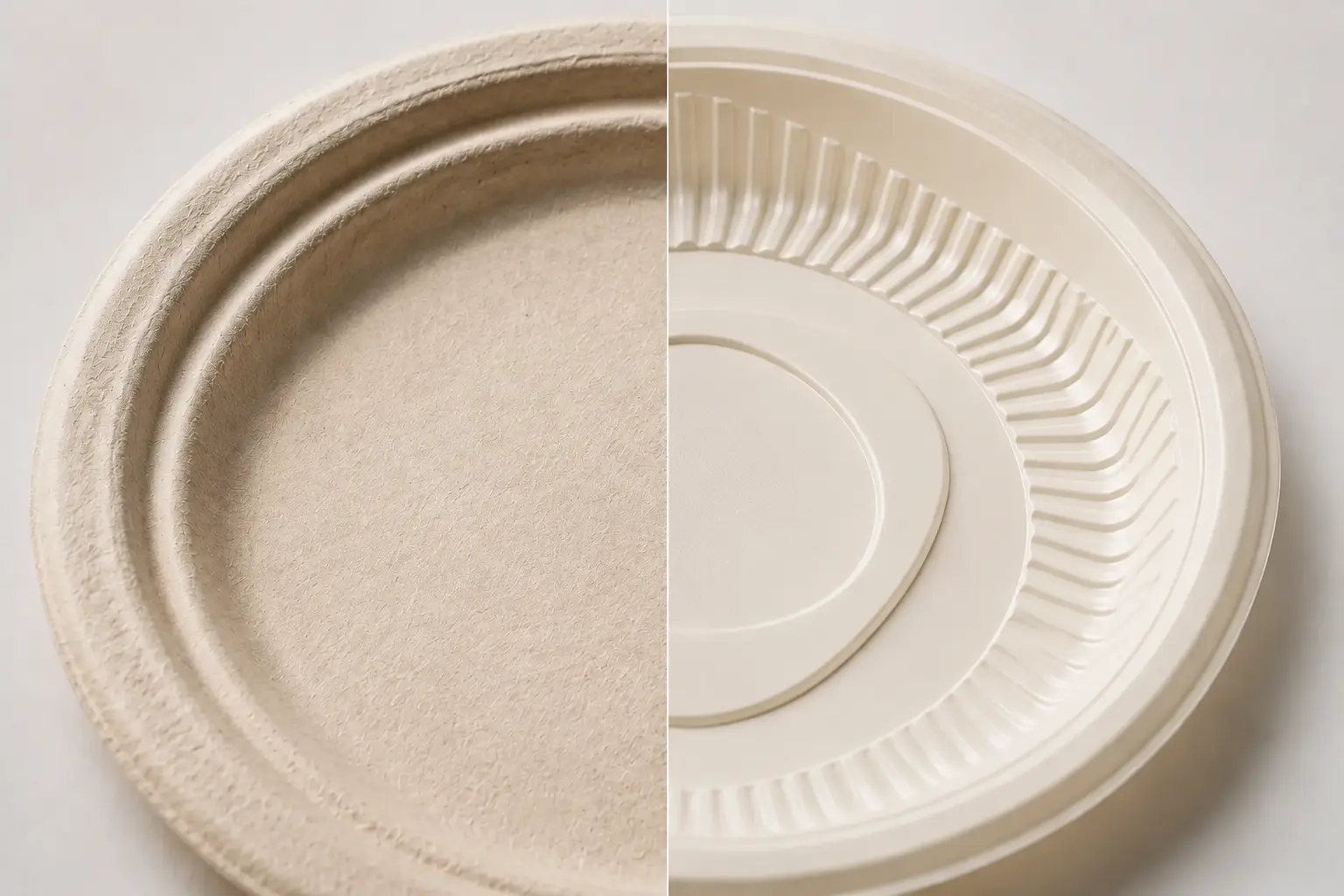
| Topic | Bagasse tableware | Starch-based tableware |
|---|---|---|
| Principal material | Sugarcane fibre | Starch-derived biopolymer compounds, depending on formulation |
| Appearance and feel | Matte and fibrous | Semi-matte, with ribs and moulded details |
| Forming process | Moulded-fibre forming | Depends on the biopolymer and formulation |
| Selection basis | Food type and model specification | Food type and model specification |
ENVIRONMENTAL BENEFITS
Bagasse uses fibre left from sugarcane processing and reduces reliance on fossil feedstocks.
The fibre is pulped and moulded into food-service tableware and can be directed to an appropriate composting route after use.
Correct separation after use is part of a responsible product cycle.
Giving an agricultural by-product a new use
Turning fibre pulp into practical tableware
Separation and transfer to an appropriate composting route
CHOOSE BY APPLICATION
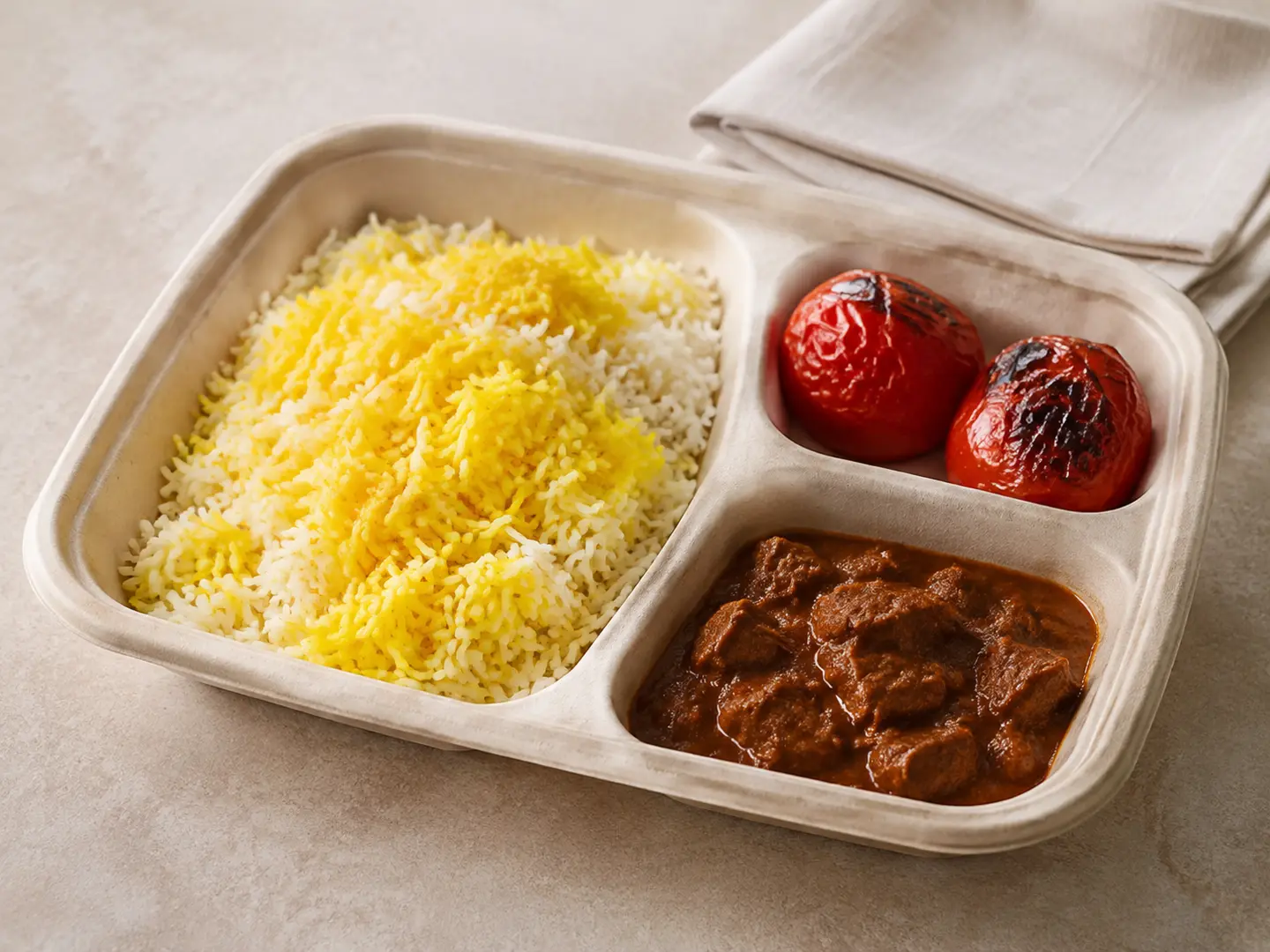
Single-compartment formats for simple meals and divided trays for keeping components separate
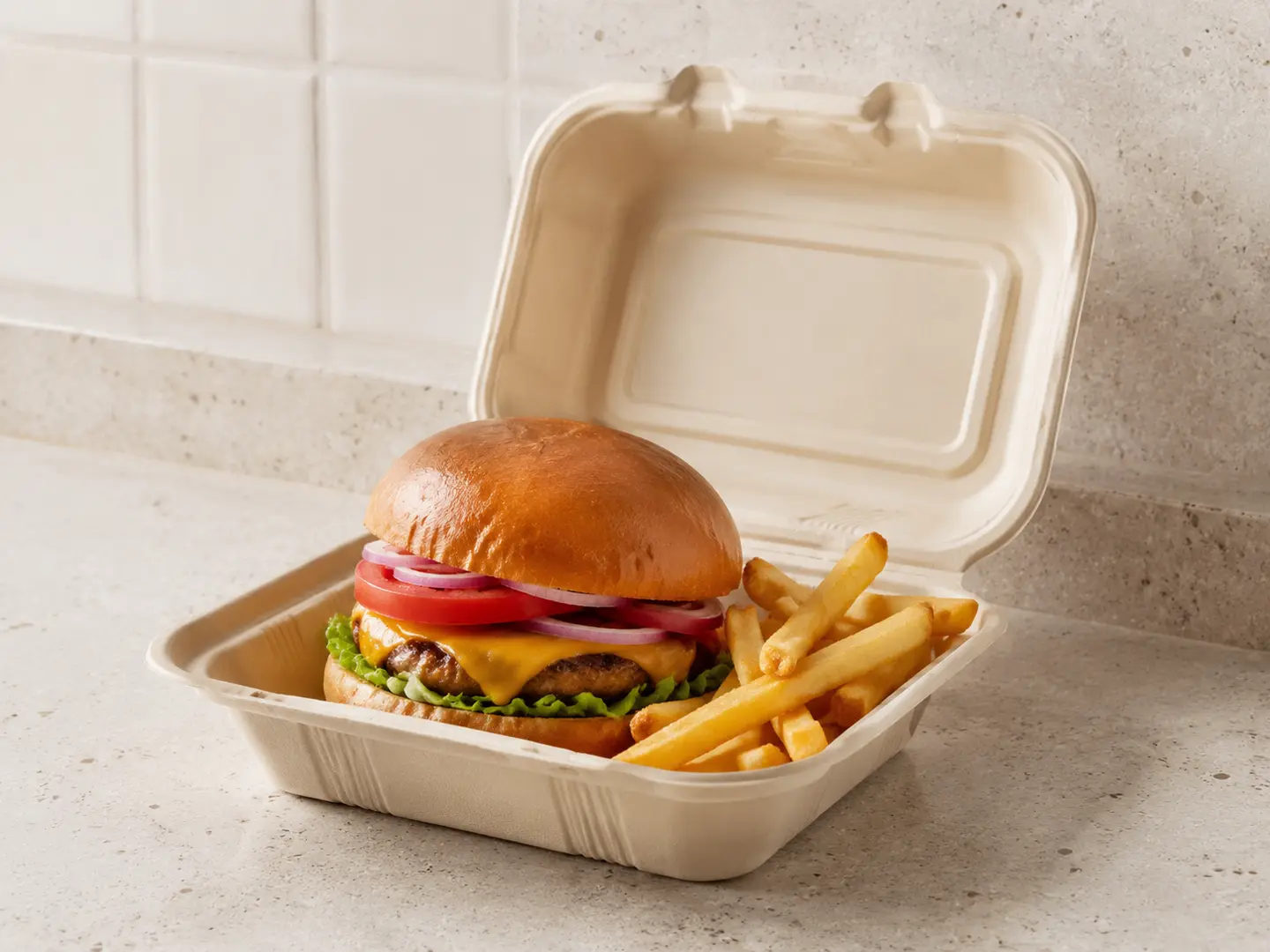
A lidded format with enough space to avoid compressing the food
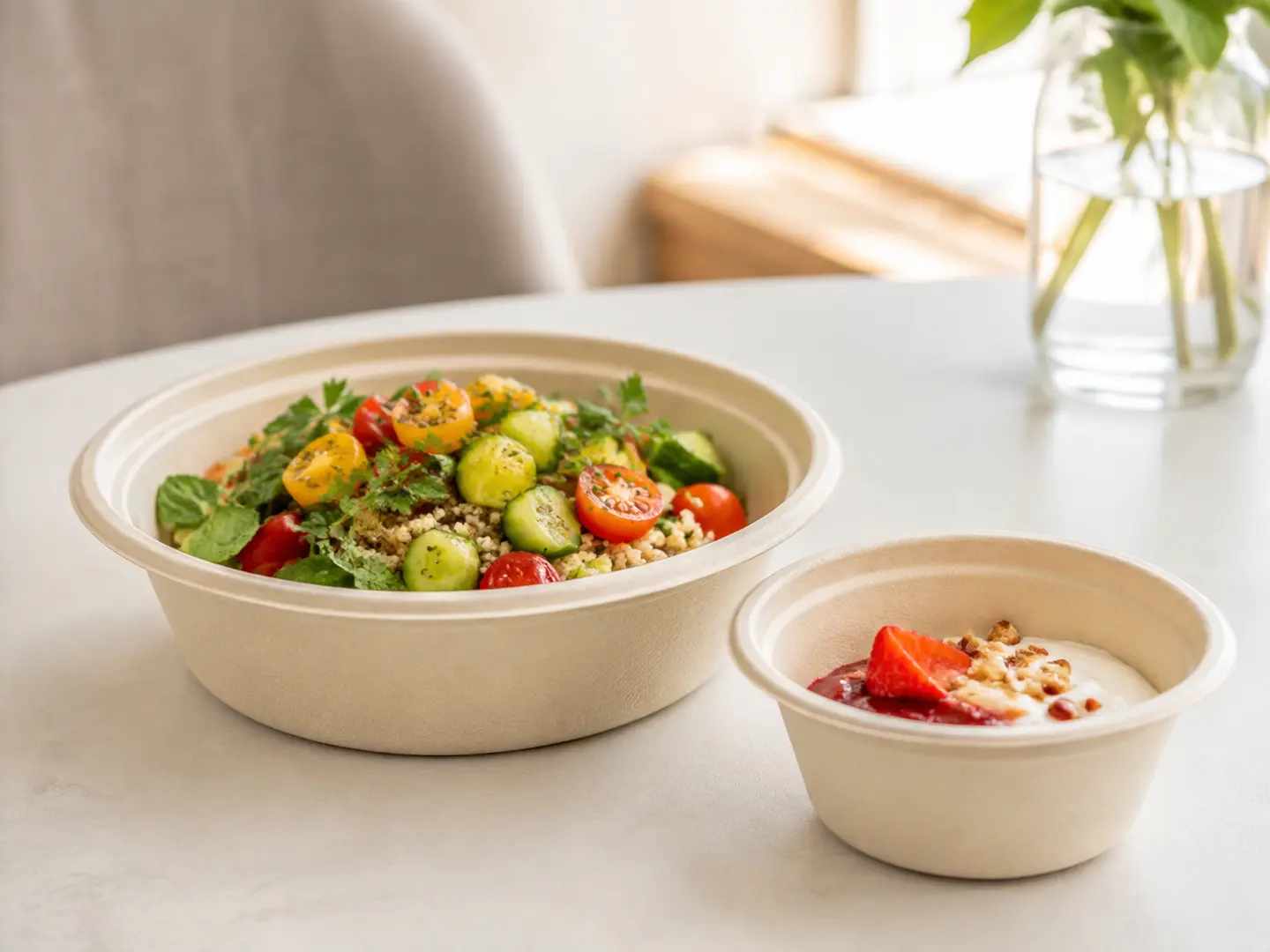
Choose according to volume, lid type and storage conditions
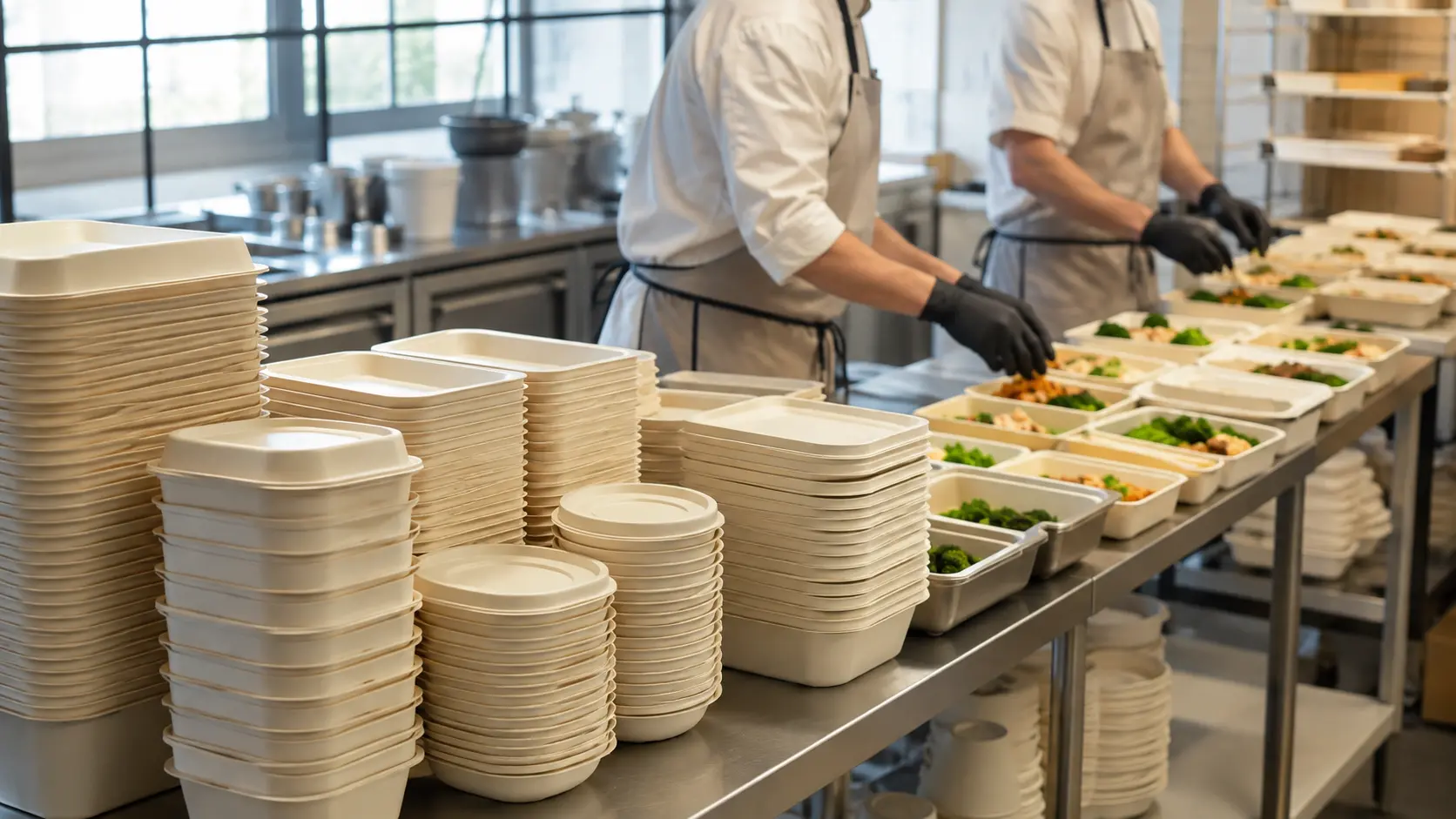
Choose according to portion size, packing speed, carton quantity and supply continuity
PRODUCTS IN THIS RANGE
Compare formats by shape, compartment count and intended use
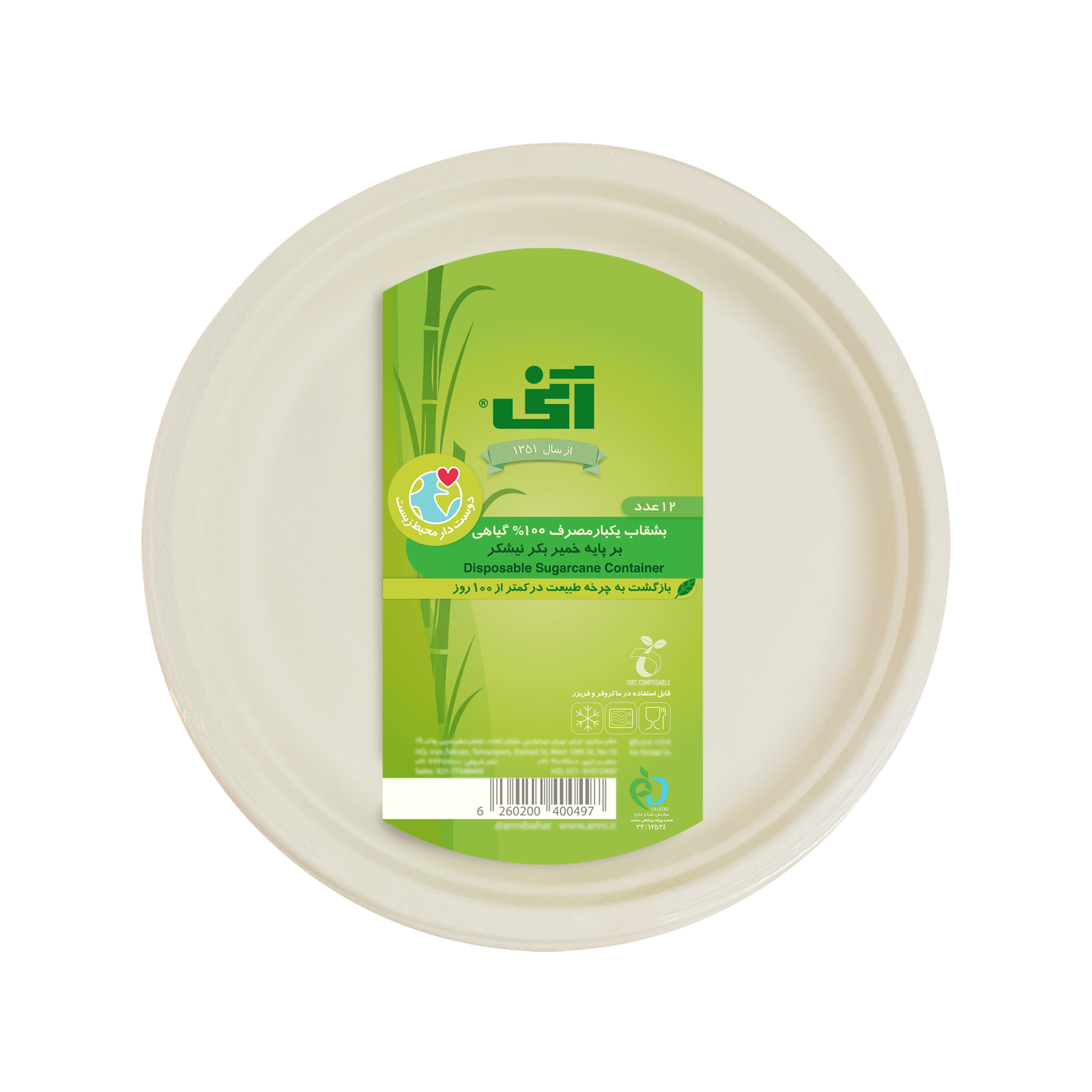
Food service and catering
View specifications →
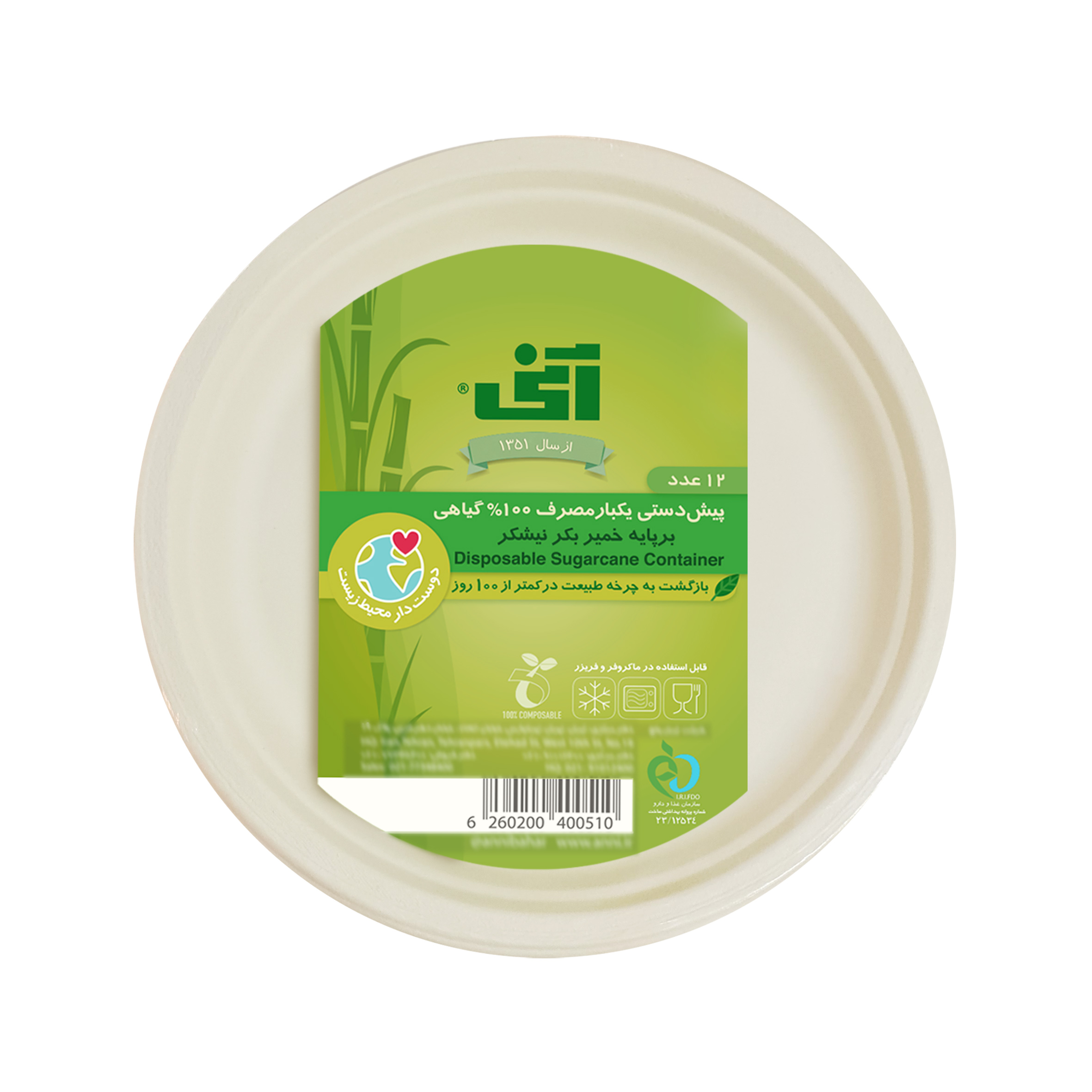
Starters, desserts and events
View specifications →
Starters, desserts and events
View specifications →
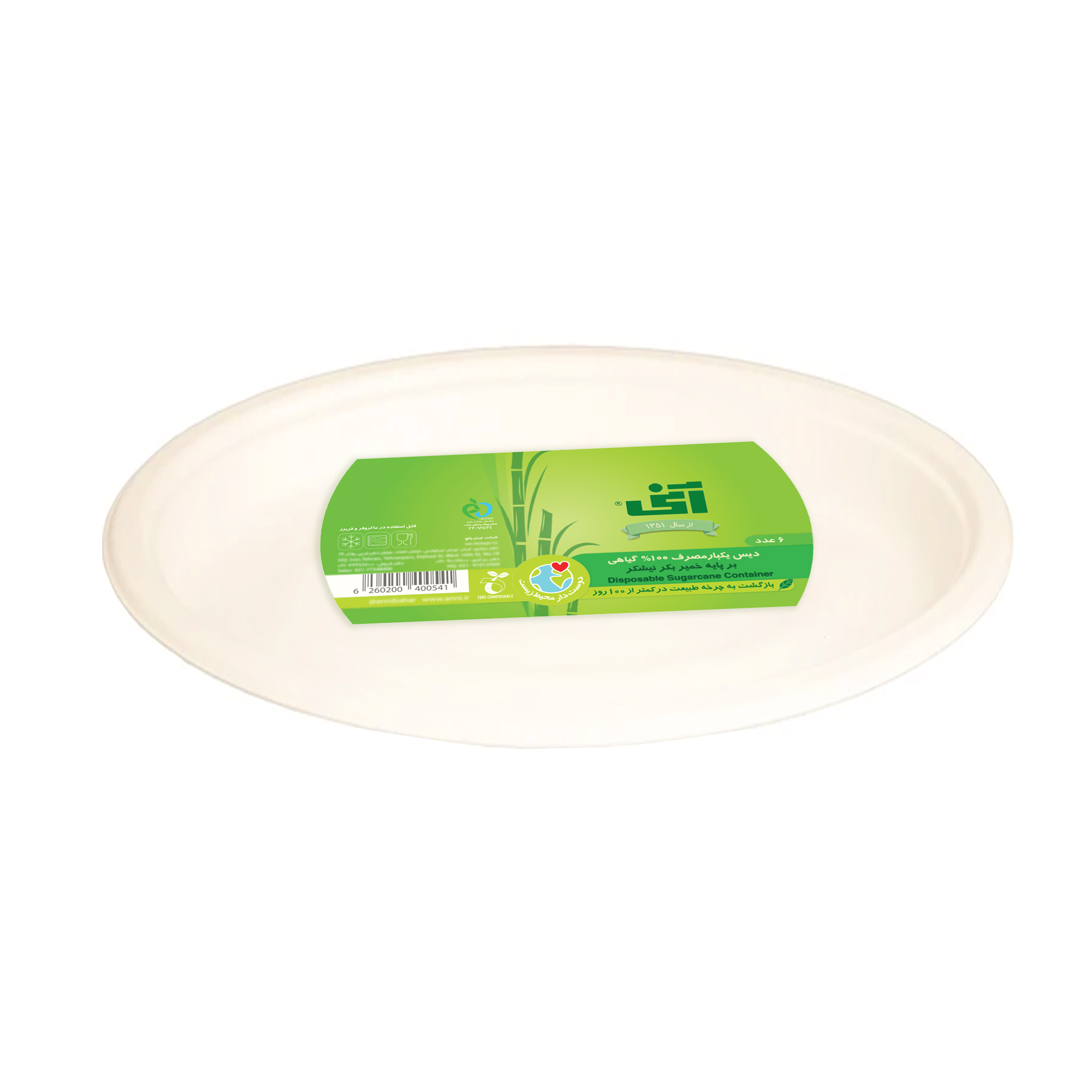
Shared dishes and event service
View specifications →
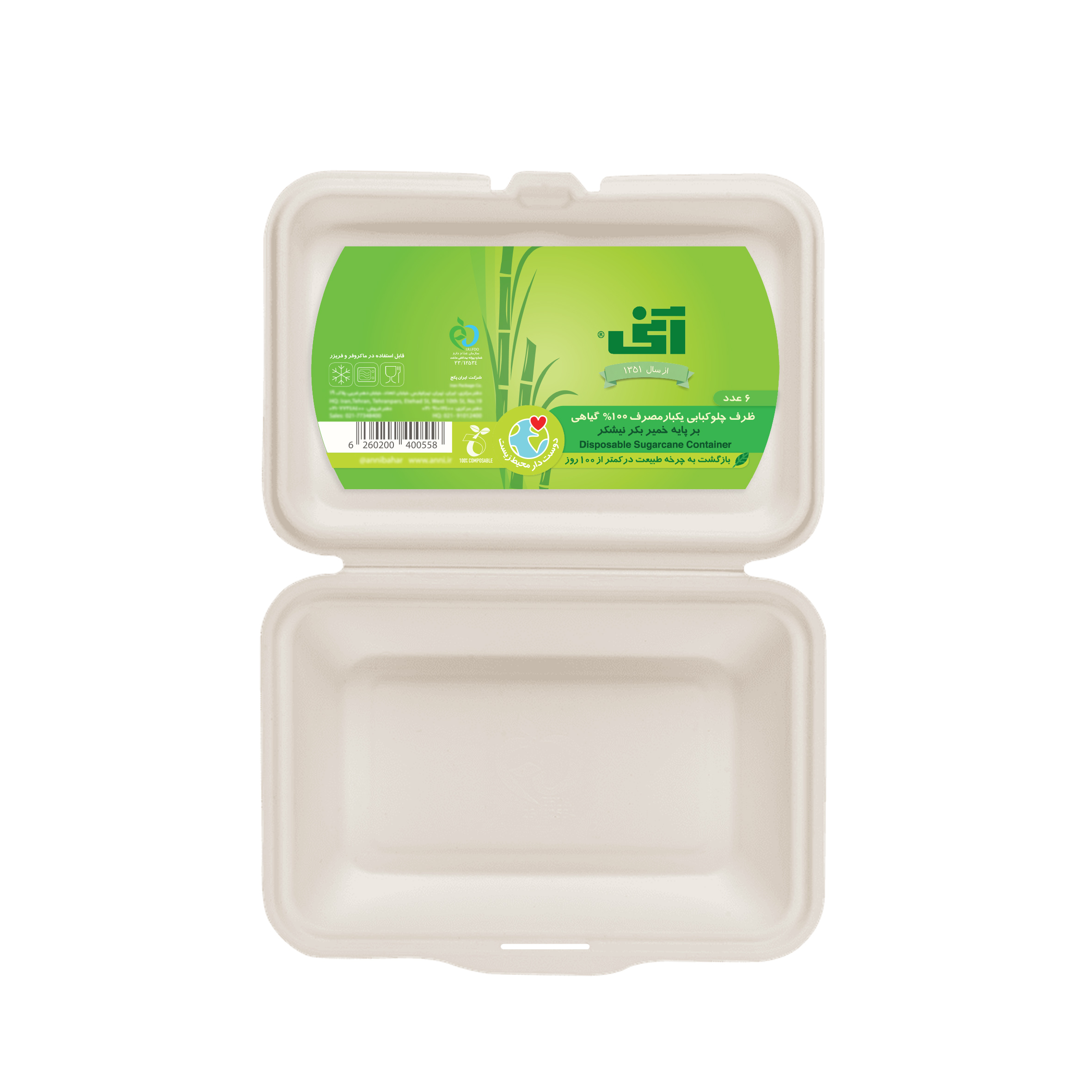
Main meals, takeaway and workplace catering
View specifications →
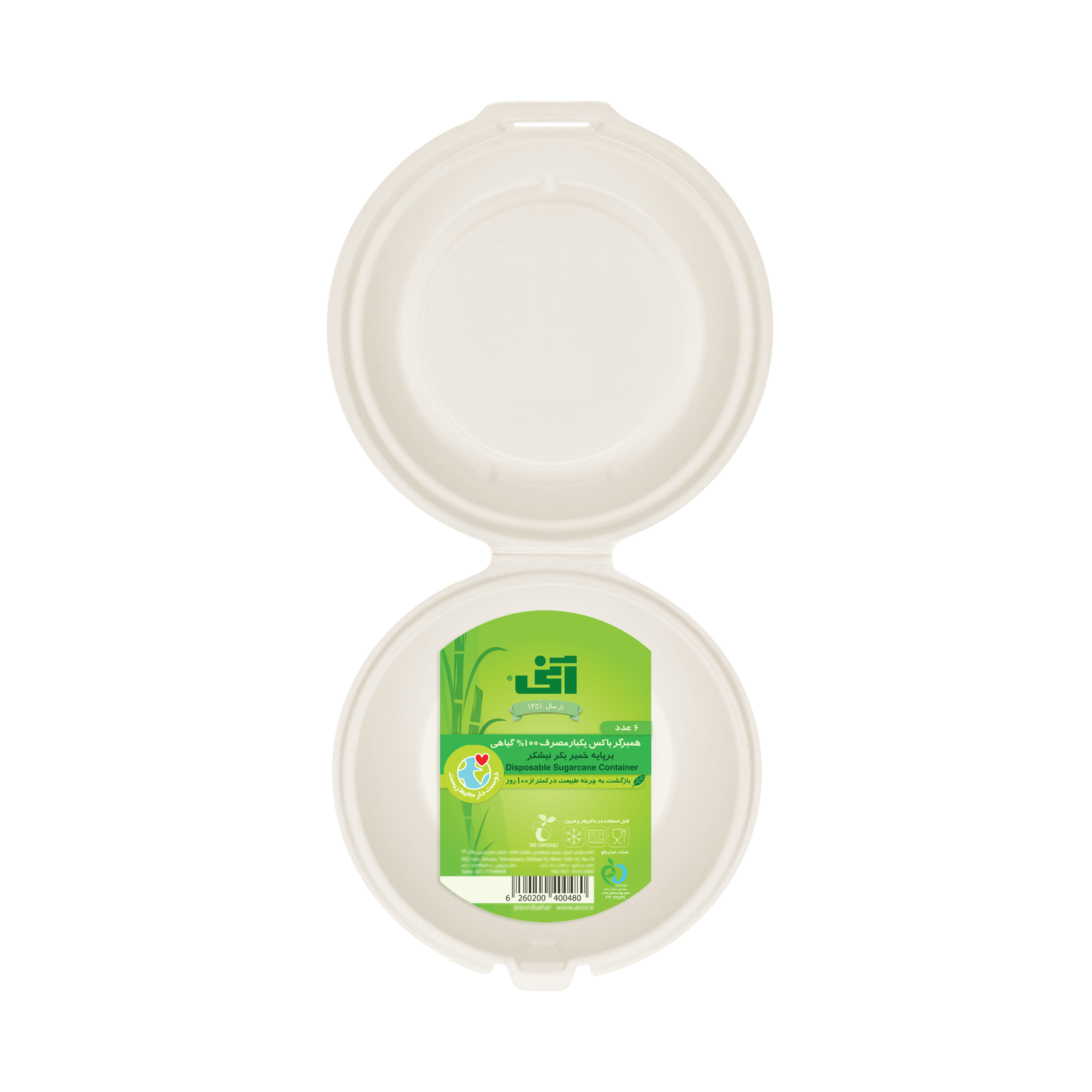
Burgers, sandwiches and fast food
View specifications →
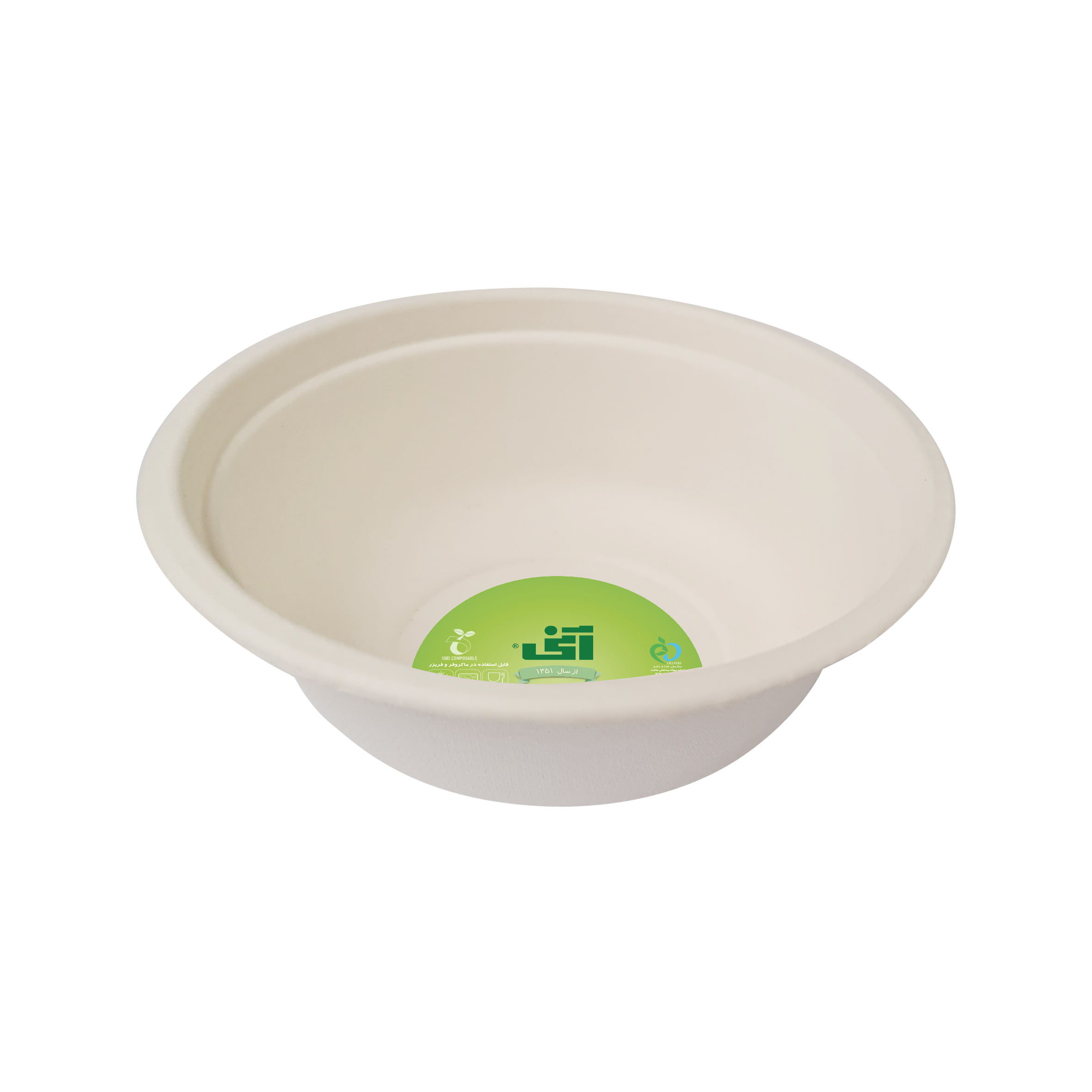
Salads, desserts, soups and sides
View specifications →
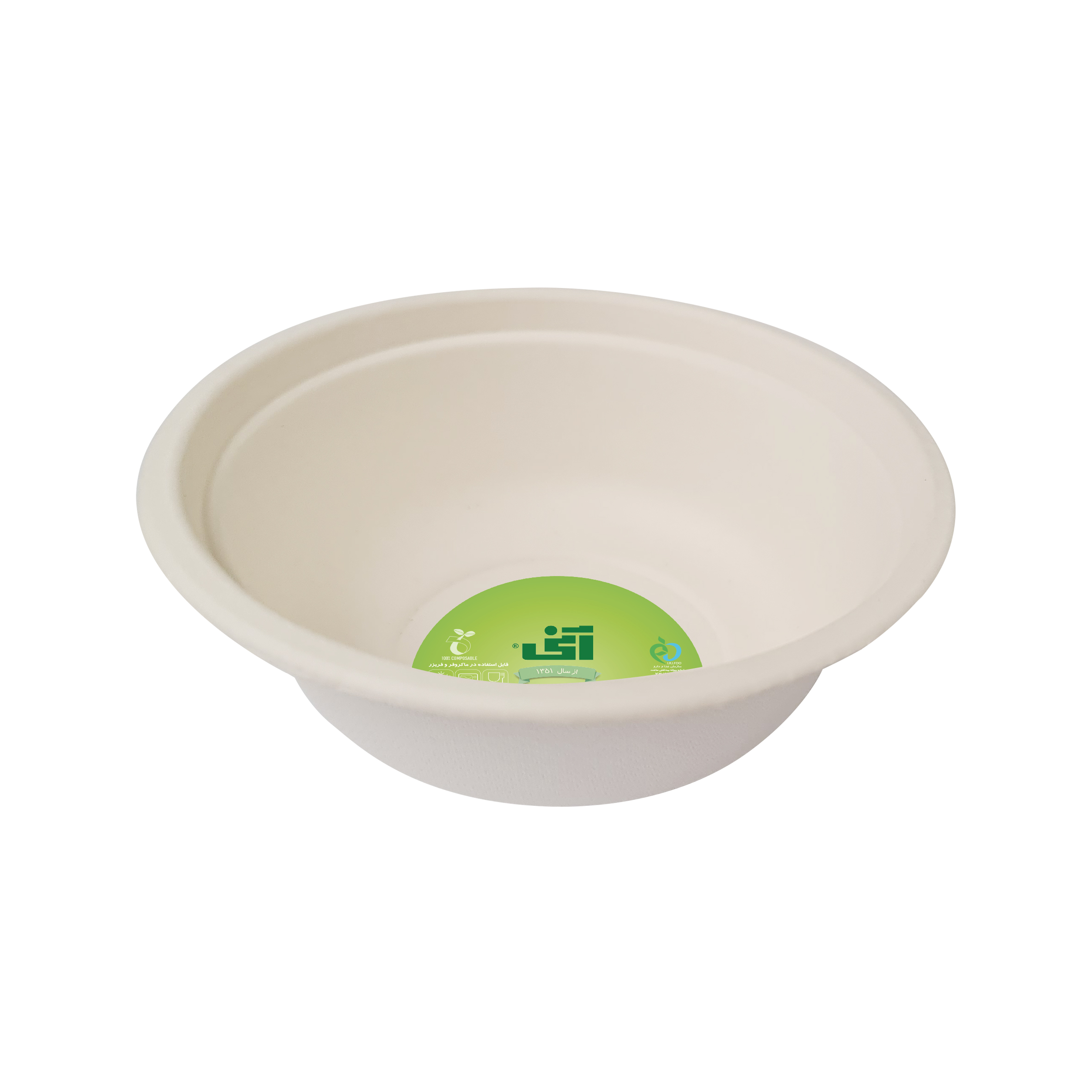
Salads, desserts, soups and sides
View specifications →
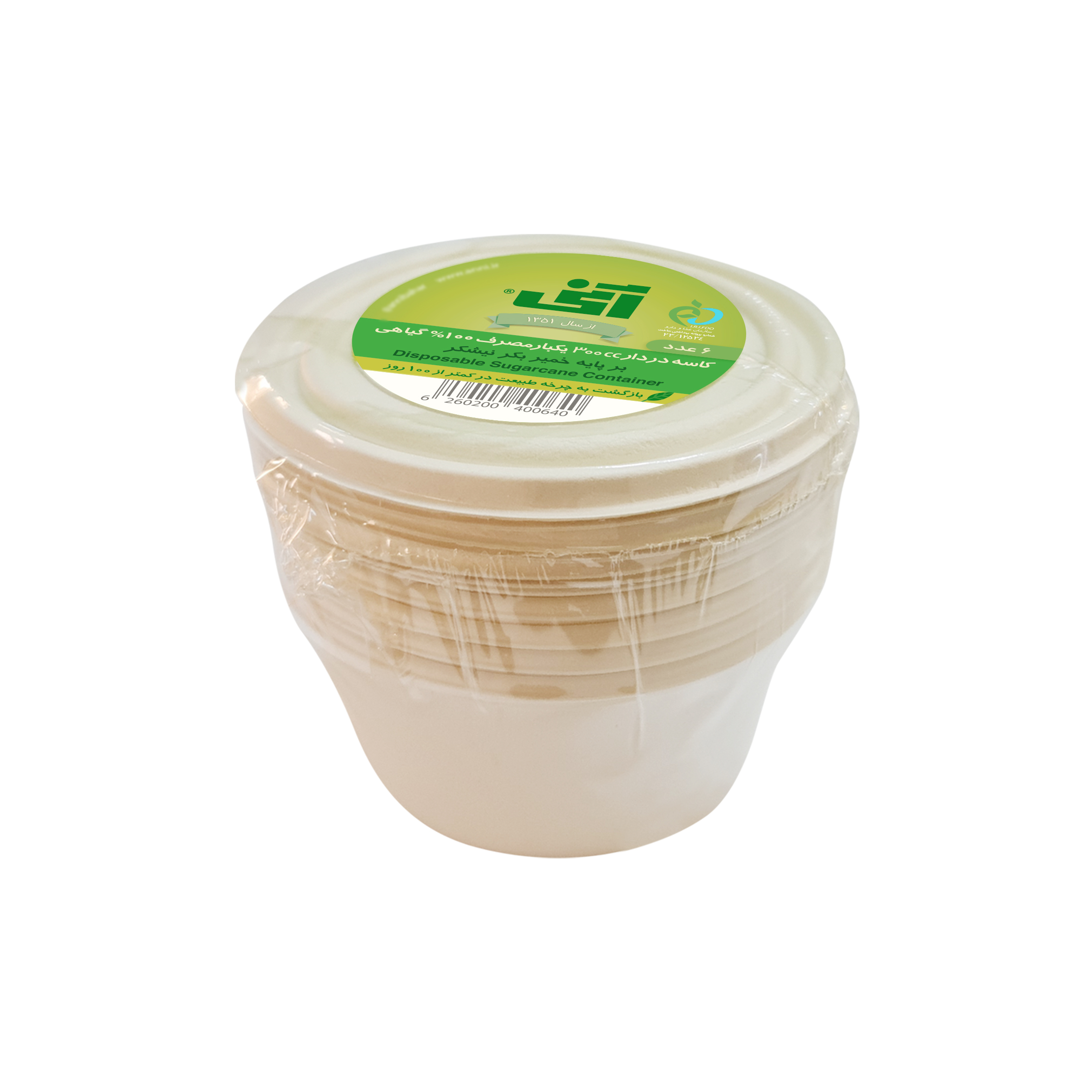
Salads, desserts, soups and sides
View specifications →
FREQUENTLY ASKED QUESTIONS
Plant-based tableware is a broad category for products whose principal material comes from plant sources. Sugarcane-fibre and starch-based biopolymer tableware are different families within that category.
Its principal material is the fibrous portion of sugarcane left after juice extraction, which is pulped and moulded into shape.
Bagasse has a moulded-fibre structure, while starch-based tableware is usually made from starch-derived biopolymer compounds. Their appearance, production process and performance differ.
Bagasse is an agricultural by-product whose fibres can be pulped and moulded into practical tableware.
Correct separation and transfer to an appropriate waste-management route are important parts of responsible use.
Food type, journey time, portion size and packing method all affect the right choice.